Your comment will be published within 24 hours.

You know that moment when you walk in the door, drop your keys, and before you even take off your shoes you catch it. The smell. Not full on disaster, but definitely cat. If you have ever stood there thinking, I clean, I scoop, I love this cat, why does my home still smell like this, you are not alone.
Living with cats means accepting some fur on the sofa and the occasional zoomies at three in the morning. What you do not have to accept is a strong cat smell at home that makes you feel embarrassed when people visit. With some simple cat odor tips and a gentle routine, you can keep your space fresh without stressing yourself or your feline. Let us break this down layer by layer, because odor usually comes from three places. The litter box, the fabrics, and the air in the room.
Tired of boring toys that your pet ignores after five minutes? Discover the ultimate collection of pet-approved toys designed to keep dogs, cats, and even exotic pets happy, active, and mentally sharp. From chew-proof fetch balls to interactive puzzle toys, every pick is vet-recommended, durable, and loved by pets everywhere.
Make playtime the best time of their day. Bring home joy, health, and tail-wagging excitement today!
Before you buy every spray and filter on the market, it helps to understand what you are really smelling.
If you tackle each of these calmly and consistently, the overall cat smell at home becomes mild or barely noticeable. Your goal is not a home that smells like a perfume counter. Your goal is a clean, comfortable space that smells like people live there, not like a litter box.
Let us be honest. The litter box is usually the main culprit. The good news is that even small changes to your litter routine can dramatically reduce odor.
If there is one cat odor tip that matters most, it is this. Scoop every day. I know, it sounds too simple. But scooping once a day, or twice if you have several cats, removes most of the odor before it has a chance to spread.
Even with daily scooping, litter gets saturated over time. Urine breaks down into ammonia, which is very strong smelling and also unpleasant for your cat.
You might also notice over time that the plastic of the box holds onto odors. If a box still smells after washing, it might be time to replace it.
Every cat is different, but there are a few general tips that help.
If your cat suddenly stops using the litter box or the odor becomes unusually strong, it is worth talking to a vet. Sometimes medical issues like urinary tract infections or digestive problems can change the smell or frequency of elimination.
If your litter routine is solid but you still notice cat smell at home, take a look at the soft surfaces. Fabrics are like odor sponges, especially where your cat loves to curl up.
Most cats repeat the same sleeping spots. These patches quietly collect hair, dander, and sometimes a bit of drool or litter dust.
If your cat loves sleeping on your bed or sofa, using washable throws can be a lifesaver. You simply shake them outside, then toss them in the wash instead of needing to deep clean the whole sofa.
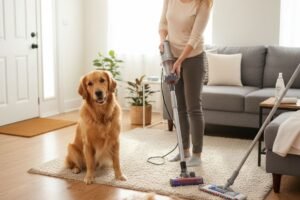
Regular vacuuming makes a huge difference for cat odor and general cleanliness.
Enzyme cleaners are especially helpful, because they break down the proteins in urine and vomit that cause lingering smells. If you skip this step, a faint odor may stick around and invite repeat accidents in the same spot.
Once the litter and fabrics are under control, the last layer is the room itself.
The simplest fix is also the most forgotten.
Even a short burst of fresh air can reset a room that feels stuffy.
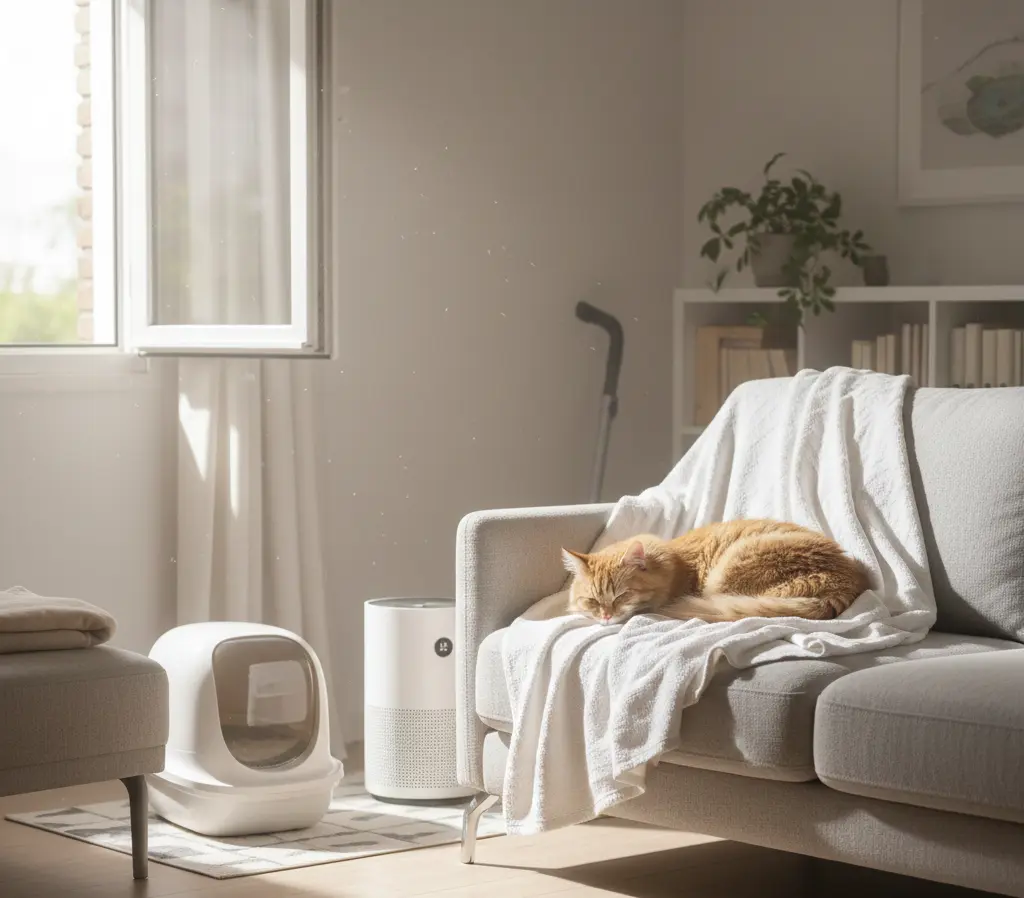
If you live in an apartment or a space with limited ventilation, a pet friendly air purifier can be helpful. Look for one with a filter that targets both odors and small particles like dander. Place it in the room that tends to smell most, often the one with the litter box.
It is very tempting to reach for strong candles and sprays. The problem is that many of these only mask smells, and some cats are sensitive to heavy fragrance.
A clean room will always smell better than a heavily perfumed but unwashed one.
Sometimes a sudden change in smell is your cat quietly asking for help.
You may want to contact your vet if you notice.
Health issues like kidney disease, diabetes, digestive problems, or stress can change how often your cat uses the box and how strong things smell. Getting support early helps both your cat and your home. For more critical cues to watch out for, read our guide on 7 Subtle Signs Your Cat Might Be Sick.
Here is a gentle weekly rhythm that many cat parents find manageable.
The key is consistency, not perfection. A slightly lived in but clean home is exactly what your cat wants too.
If your home smells like cat right now, it does not mean you are failing as a pet parent. It only means your cat is part of your daily life, and you are still fine tuning the balance between cosy companionship and fresh air.
To maintain your cat’s coat and keep odors down, occasional washing may be necessary. Learn our easy methods in How to Bathe a Cat Without Frustration.
Also, for safe, effective cleanup of fabrics and floors, avoid store-bought chemicals—discover DIY Pet-Friendly Cleaning Solutions using household ingredients.
With small habits like daily scooping, weekly washing, and a focus on true cleaning over heavy fragrance, the cat smell at home softens. One day you will walk in the door, take that deep breath, and smell your space first and your cat only softly in the background. And honestly, that gentle reminder that a furry friend is waiting inside. That is part of the magic, not the problem.

At CheekyPetsCo, we’re a team of passionate pet lovers dedicated to helping you give your furry, feathery, or scaly friends the happiest, healthiest life possible. From expert tips on nutrition and training to fun facts and care guides for dogs, cats, and exotic pets. Our mission is to make pet parenting smarter, easier, and full of joy. Because every pet deserves a little cheeky love!
Your comment will be published within 24 hours.