Your comment will be published within 24 hours.

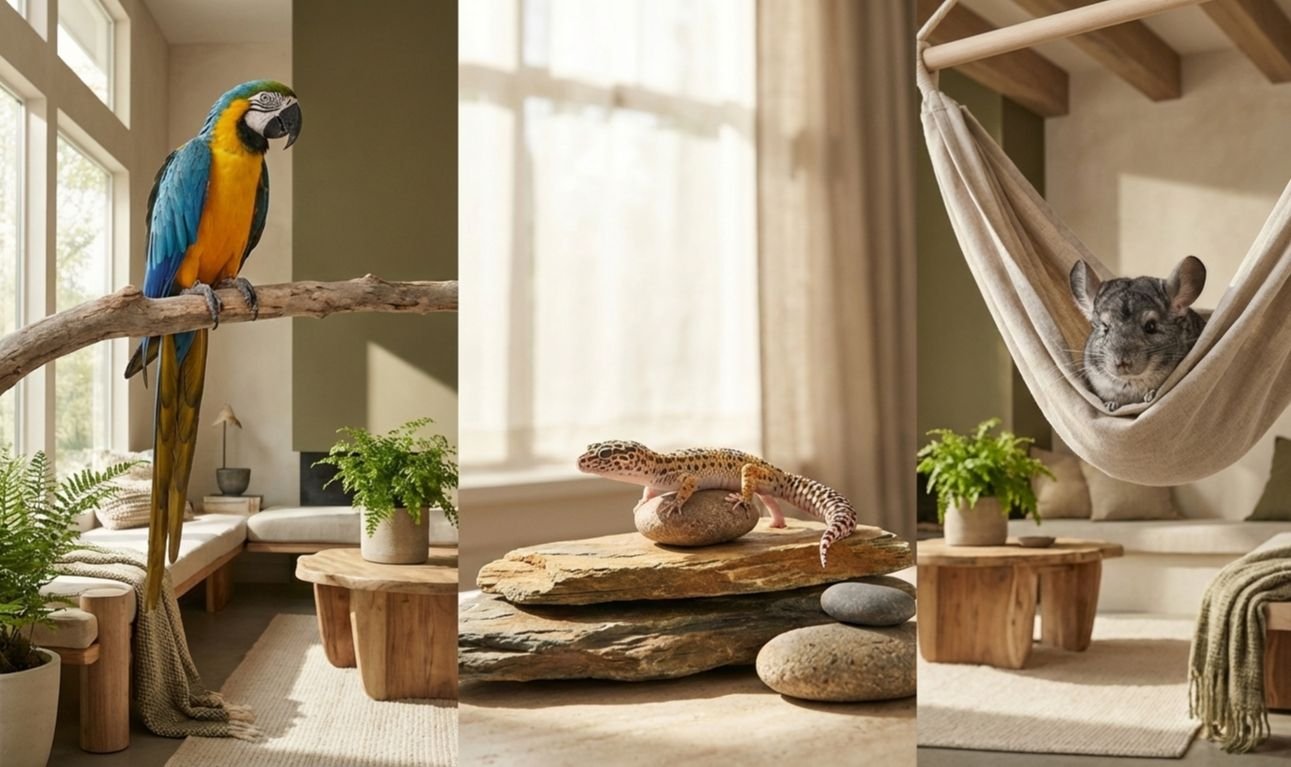
Every exotic pet carries within it the memory of the wild. A parrot that perches in your living room, a gecko that lounges beneath a lamp, or a chinchilla that curls up in a hammock still holds the instincts of its ancestors. Those instincts do not disappear in captivity. They wait quietly for the right kind of environment to awaken them.
Encouraging natural play behaviors is one of the most meaningful ways to honor that inner wildness. It restores balance and transforms captivity into comfort. Through play, exotic pets express curiosity, independence, and emotion. They test their bodies and explore their surroundings in ways that nurture both physical and mental health.
For guidance on creating safe, engaging environments for exotic pets, visit CheekyPetsCo’s Exotic Toy Collection:
Play is not an accident. It is a deep biological need shared across species. For birds, play develops balance and coordination. For reptiles, it sharpens observation and decision-making. For small mammals, it releases energy and helps them understand their territory.
In captivity, these behaviors are no less important. Play becomes therapy. It releases tension, relieves boredom, and helps animals process their environment. Encouraging it is not simply entertainment; it is essential for emotional stability and physical vitality.
Learn more about behavioural wellness and emotional enrichment at CheekyPetsCo’s Exotic Health Hub:
Before adding new toys or rearranging habitats, spend time watching. Observation reveals what kind of play your pet truly enjoys. A parrot that tilts its head toward moving objects is ready for visual play. A gecko that hides often prefers security-based exploration. A rabbit that digs constantly is expressing its need for tactile satisfaction.
Observation builds trust. It also prevents overstimulation or fear. When you understand your pet’s natural preferences, you can shape activities that feel safe and rewarding.
For help decoding exotic pet body language and responses, visit CheekyPetsCo’s Exotic Training Hub:
A well-designed environment is the foundation of natural play. Instead of overwhelming your pet with too many toys, create a space that encourages gentle discovery. Offer layers, textures, and safe hiding spots.
Birds thrive in environments with climbing opportunities and chewable materials like untreated wood. Reptiles appreciate rocks, branches, and multiple basking levels. Small mammals love tunnels, boxes, and materials they can manipulate. Change the layout occasionally to simulate the natural variation they would experience outdoors.
A living space that feels dynamic helps animals remain curious and confident. Each new scent or surface becomes a micro-adventure that strengthens their bond with the environment.
For setup ideas and cleaning guidance, explore CheekyPetsCo’s Exotic Cleaning Hub:
Food is nature’s greatest motivator. In the wild, animals must work for every meal. They forage, stalk, and solve problems. Bringing that challenge into captivity awakens instinct.
You can hide treats in paper bundles, under branches, or inside puzzle feeders. Birds enjoy tearing soft paper to uncover seeds. Reptiles benefit from movement-based feeding tools that mimic hunting. Small mammals, like guinea pigs or ferrets, can dig through hay to find vegetables or pellets.
This kind of play not only provides exercise but also reduces stress hormones. It helps prevent overeating by turning food into a reward rather than a passive habit.
Learn more about interactive feeding and foraging enrichment at CheekyPetsCo’s Exotic Food Hub:
Exotic pets thrive when given the freedom to move. Movement keeps muscles strong, circulation healthy, and mood balanced. Birds that climb or fly regularly display brighter plumage and calmer behaviour. Reptiles that explore multiple temperature zones maintain better digestion and energy levels. Small mammals that run, dig, and burrow show less anxiety and more curiosity.
Encourage your pet to move by making their environment an open invitation. Add safe climbing routes, rearrange objects, or introduce new scents. Keep the experience natural. The best enrichment feels like discovery, not instruction.
Learn about active play and mobility enrichment at CheekyPetsCo’s Exotic Health Hub:
Variety keeps the mind sharp, but consistency maintains comfort. Exotic pets need both. Too much change can cause stress, while monotony dulls curiosity. The key is balance. Introduce new elements gradually while keeping certain familiar items that act as emotional anchors.
For example, replace one or two toys each week instead of changing everything at once. Adjust the arrangement of perches, tunnels, or climbing surfaces, but leave key shelter zones untouched. This gentle rhythm mirrors the slow shifts of nature, where each day brings small, manageable change.
For insights on habitat rotation and emotional resilience, visit CheekyPetsCo’s Exotic Training Hub:
Not all play needs to happen alone. Many exotic animals are social by nature. Birds communicate through calls and shared games. Small mammals often groom or chase one another. Even reptiles, though solitary, can show curiosity toward controlled social interactions through visual barriers or scent exchange.
Engaging with your pet builds trust. Speak softly, mirror movements, or offer gentle touch where appropriate. Over time, these moments of shared play strengthen emotional connection and reduce fear responses.
For interactive bonding tips, explore CheekyPetsCo’s Exotic Toy Collection:
Play should never be forced. If your pet hides, freezes, or avoids interaction, it may feel unsafe. Respect those boundaries. Offer familiar scents, soft lighting, and calm presence until curiosity returns. Each animal has its own pace, and the goal is to create a sense of safety that encourages voluntary engagement.
When play becomes part of your pet’s daily rhythm, you will notice more relaxed postures, steady appetite, and consistent activity. These are signs that enrichment is working.
For help understanding stress cues and recovery techniques, visit CheekyPetsCo’s Exotic Health Hub:
Natural play is not about entertainment. It is a bridge between captivity and instinct. Every shred of paper, every climb, and every playful nibble helps your pet reconnect with its truest nature. By fostering an environment that feels alive, you give your companion not only stimulation but also dignity.
When exotic pets are allowed to play as nature intended, they become more than animals living behind glass or bars. They become partners in curiosity and joy.
For detailed enrichment plans, species-specific toy guides, and behavioural support, visit CheekyPetsCo’s Exotic Toy Collection:

At CheekyPetsCo, we’re a team of passionate pet lovers dedicated to helping you give your furry, feathery, or scaly friends the happiest, healthiest life possible. From expert tips on nutrition and training to fun facts and care guides for dogs, cats, and exotic pets. Our mission is to make pet parenting smarter, easier, and full of joy. Because every pet deserves a little cheeky love!
Your comment will be published within 24 hours.