Your comment will be published within 24 hours.

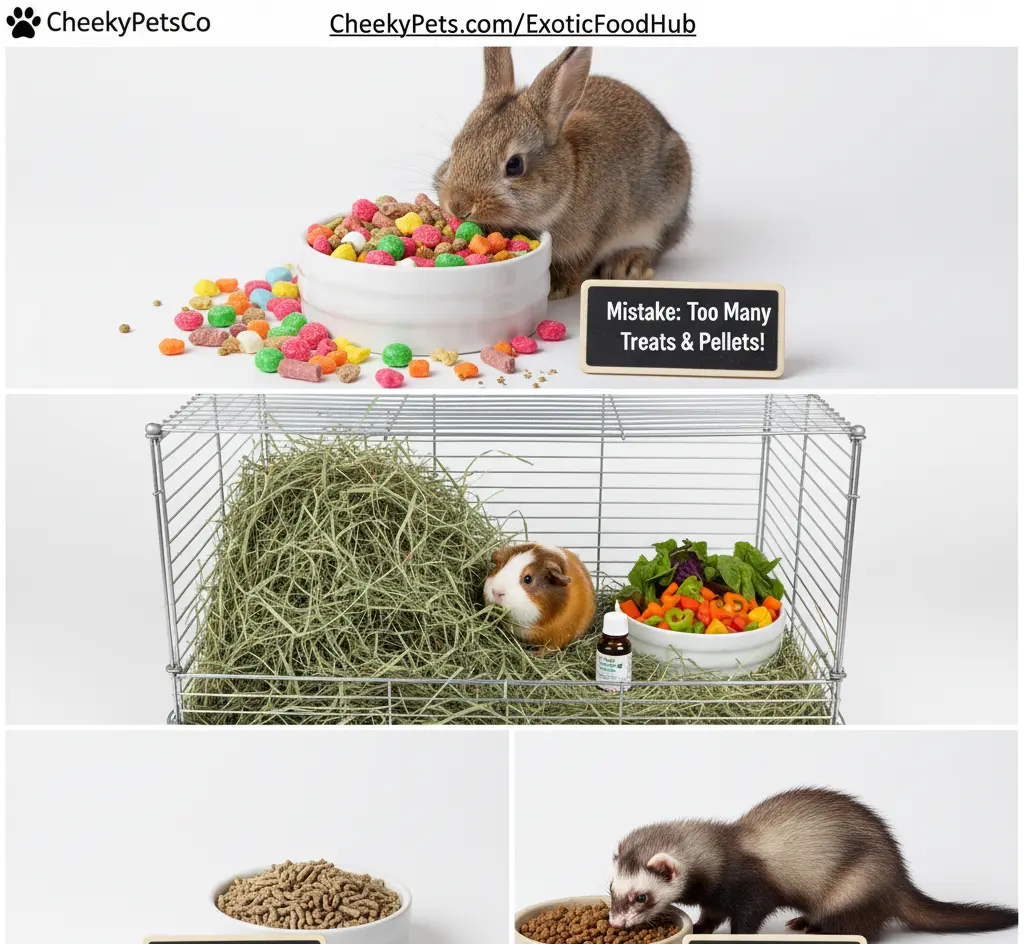
Feeding small mammals looks simple, but their digestive systems are delicate and species-specific. Rabbits need endless hay, guinea pigs depend on vitamin C, and ferrets are strict carnivores. A single wrong ingredient can cause obesity, dental problems, or digestive issues.
This guide highlights the top diet mistakes exotic owners make and offers practical corrections that keep your furry companions thriving.
For full nutrition resources, visit CheekyPetsCo’s Exotic Food Hub.
Tired of boring toys that your pet ignores after five minutes? Discover the ultimate collection of pet-approved toys designed to keep dogs, cats, and even exotic pets happy, active, and mentally sharp. From chew-proof fetch balls to interactive puzzle toys, every pick is vet-recommended, durable, and loved by pets everywhere.
Make playtime the best time of their day. Bring home joy, health, and tail-wagging excitement today!
Pellets are convenient, but too many replace essential fiber. Rabbits and guinea pigs need hay as the main diet component to keep teeth worn and digestion smooth. Pellets should only supplement fresh forage, not dominate the bowl.
Learn about balanced fiber-rich feeding ratios at CheekyPetsCo’s Exotic Health Page.
Timothy or orchard hay should be available 24/7. Greens like romaine lettuce, parsley, and cilantro add hydration and nutrients. Avoid iceberg lettuce, which offers little nutrition and can cause soft stool.
Find hay quality and storage tips at CheekyPetsCo’s Exotic Food Section.
Ferrets cannot process fiber; they require high-protein, meat-based diets. Feeding plant matter can upset their digestion. Guinea pigs, on the other hand, must have daily vitamin C because they can’t produce it naturally.
See species-specific nutrition plans at CheekyPetsCo’s Exotic Training Hub.
Sweet treats like fruit drops or yogurt bites may look fun, but they promote obesity and diabetes. Limit sugary snacks to rare occasions and use vegetables or hay cubes for daily enrichment.
Learn healthy treat alternatives and portion control at CheekyPetsCo’s Exotic Food Hub.
Many owners forget to change water daily. Bacteria in bottles can cause illness. Offer fresh water in both bottles and shallow dishes to encourage drinking. Clean containers with warm water and mild soap every day.
Find hydration hygiene practices at CheekyPetsCo’s Exotic Cleaning Section.
Small mammals have sensitive guts that rely on consistent microbiomes. Sudden food swaps can cause bloating or diarrhea. Introduce new items slowly over a week.
Read safe transition methods at CheekyPetsCo’s Exotic Health Hub.
Scatter feeding or puzzle toys encourage natural foraging and prevent boredom. Foraging also promotes mental health and physical activity.
Explore feeding enrichment ideas and toys at CheekyPetsCo’s Exotic Toy Collection.
Small mammals depend on owners for balance and variety. Avoiding common diet mistakes keeps their bodies healthy and minds active. Every meal should mirror nature—fresh, fibrous, and fun.
Find expert-approved hay, pellets, and feeding accessories at CheekyPetsCo’s Exotic Food Hub and give your little friends the nutrition they deserve.

At CheekyPetsCo, we’re a team of passionate pet lovers dedicated to helping you give your furry, feathery, or scaly friends the happiest, healthiest life possible. From expert tips on nutrition and training to fun facts and care guides for dogs, cats, and exotic pets. Our mission is to make pet parenting smarter, easier, and full of joy. Because every pet deserves a little cheeky love!
Your comment will be published within 24 hours.