Your comment will be published within 24 hours.

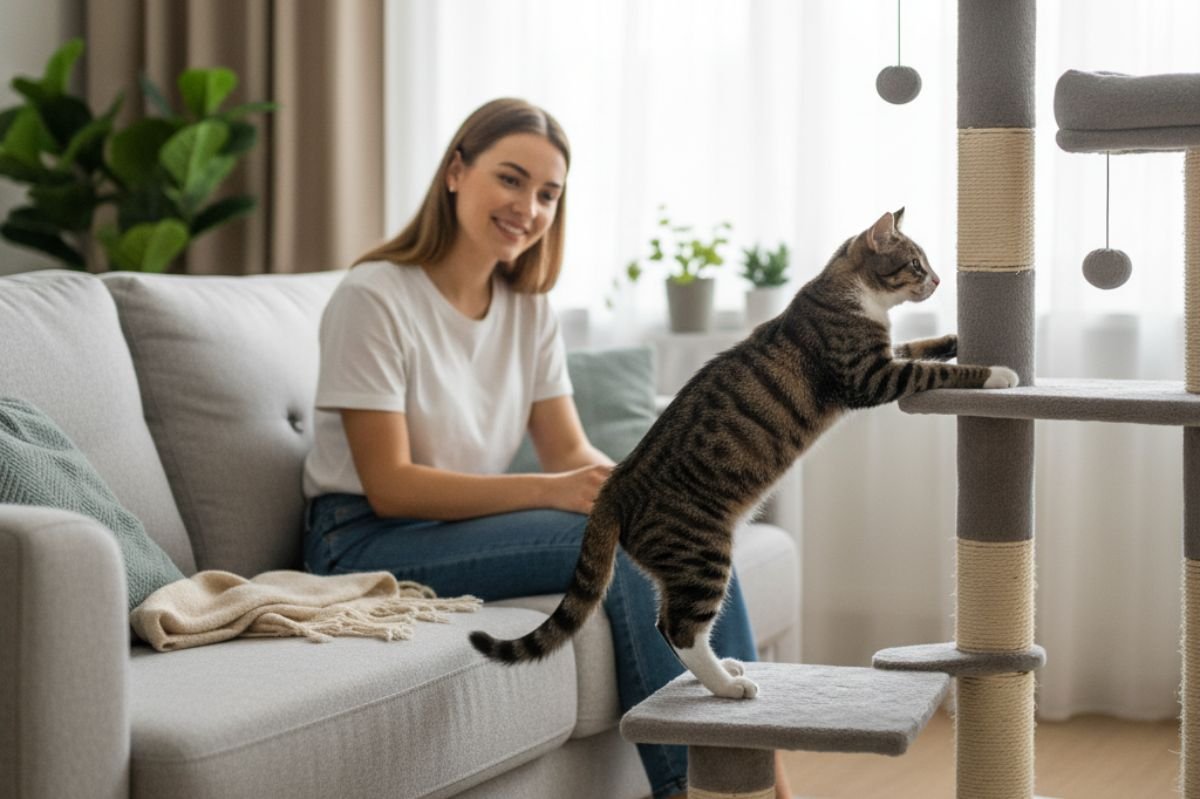
If your cat has turned your favourite couch into a scratching post, you’re not alone. Scratching is a natural and essential feline behaviour—it helps cats stretch muscles, shed old claw layers, and mark territory. The goal isn’t to stop scratching but to guide it toward appropriate objects.
With the right approach, patience, and understanding of feline instincts, you can successfully redirect your cat’s scratching habits from furniture to scratchers they’ll actually love using.
For more step-by-step training resources, visit CheekyPetsCo Cat Training Hub.
Tired of boring toys that your pet ignores after five minutes? Discover the ultimate collection of pet-approved toys designed to keep dogs, cats, and even exotic pets happy, active, and mentally sharp. From chew-proof fetch balls to interactive puzzle toys, every pick is vet-recommended, durable, and loved by pets everywhere.
Make playtime the best time of their day. Bring home joy, health, and tail-wagging excitement today!
Cats scratch for several reasons: to sharpen claws, relieve stress, stretch their bodies, and communicate through scent and claw marks. Stopping the behaviour entirely is impossible—and unhealthy. Instead, providing acceptable scratching outlets satisfies these instincts while saving your furniture.
Recognising the emotional and physical purpose of scratching helps you choose the right training strategy.
Learn more about cat behaviour and communication at CheekyPetsCo’s Cat Health Hub.
Not all scratchers are equal. Cats have personal preferences for texture, angle, and height. Common types include:
Materials like sisal fabric, corrugated cardboard, and natural wood are favourites. Avoid plush or carpeted scratchers that can confuse cats about what’s okay to scratch.
Explore scratchers and enrichment products at CheekyPetsCo’s Cat Toys Collection.
Cats scratch where they spend time, not in distant corners. Place scratchers near sleeping areas, windows, or the furniture they already target. If your cat scratches the couch, position a scratcher beside it to redirect naturally.
Once the habit forms, gradually move the scratcher to a preferred location.
For environmental setup and space management tips, visit CheekyPetsCo’s Cat Health Page.
Cats need motivation to switch habits. Sprinkle catnip or silvervine on the scratcher to attract attention. Some cats respond to dangling toys or feather attachments that encourage play and scratching at the same time.
Reward every use with verbal praise or treats. Cats repeat behaviours that bring positive outcomes.
Find training tools and reward-based products at CheekyPetsCo’s Cat Training Hub.
While your cat learns, protect surfaces with double-sided tape or plastic guards—cats dislike sticky textures. You can also use furniture-safe sprays that deter scratching without harmful chemicals.
Cover targeted spots temporarily, but never punish your cat. Redirection works better than scolding.
See cat-safe cleaning and deterrent solutions at CheekyPetsCo’s Cat Cleaning Hub.
Positive reinforcement builds long-term success. Keep treats nearby and reward your cat immediately after scratching the correct post. Timing is crucial—cats associate rewards with the most recent action.
Pair this with gentle verbal cues like “good scratch.” Over time, the behaviour becomes natural.
Read more about reward-based training techniques at CheekyPetsCo’s Cat Training Section.
Old or worn scratchers lose appeal. Replace them when frayed or flattened, but keep the same general style if your cat loved it. Cats are creatures of habit; small changes are better than sudden replacements.
Rotate locations occasionally to renew curiosity.
Explore eco-friendly replacement scratchers at CheekyPetsCo Cat Toys Collection.
Training your cat to use a scratcher is about understanding instinct, not control. Provide appealing options, reward proper behaviour, and stay consistent. With patience and positive reinforcement, your cat will happily trade your sofa for their new scratching paradise.
Browse durable, cat-approved scratchers and enrichment toys at CheekyPetsCo’s Cat Toys Collection and reclaim your furniture while keeping your cat happy and healthy.

At CheekyPetsCo, we’re a team of passionate pet lovers dedicated to helping you give your furry, feathery, or scaly friends the happiest, healthiest life possible. From expert tips on nutrition and training to fun facts and care guides for dogs, cats, and exotic pets. Our mission is to make pet parenting smarter, easier, and full of joy. Because every pet deserves a little cheeky love!
Your comment will be published within 24 hours.