Your comment will be published within 24 hours.

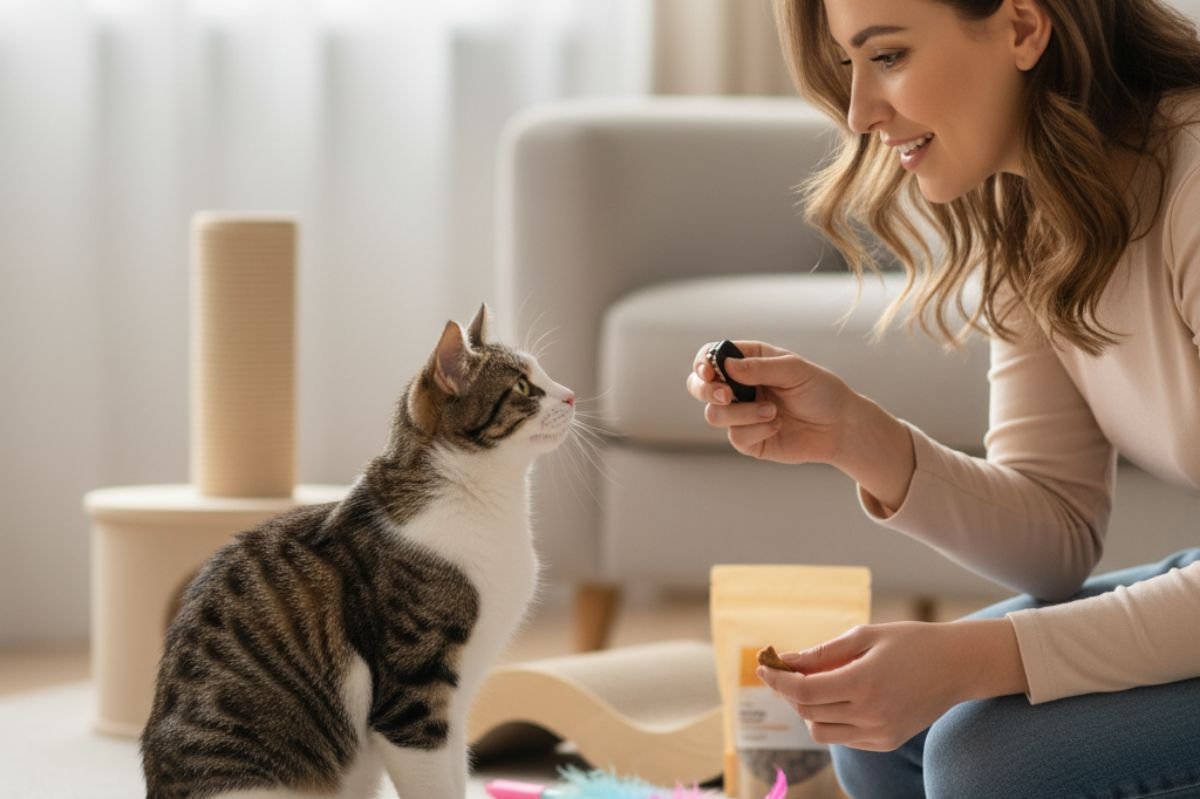
Clicker training isn’t just for dogs. Cats are intelligent, curious learners capable of understanding cause and effect. Using a small clicker and treats, you can teach them everything from simple tricks to good manners.
Clicker training helps strengthen the bond between you and your cat while building confidence and reducing unwanted behaviours. This guide will show you exactly how to start and succeed with this fun and rewarding method.
For full training resources, visit CheekyPetsCo’s Cat Training Hub.
Tired of boring toys that your pet ignores after five minutes? Discover the ultimate collection of pet-approved toys designed to keep dogs, cats, and even exotic pets happy, active, and mentally sharp. From chew-proof fetch balls to interactive puzzle toys, every pick is vet-recommended, durable, and loved by pets everywhere.
Make playtime the best time of their day. Bring home joy, health, and tail-wagging excitement today!
Clicker training is a form of positive reinforcement. Each time your cat performs the desired behaviour, you press the clicker and immediately offer a reward. The “click” becomes a clear signal that tells your cat, “Yes, that’s right!”
Because the sound is consistent and immediate, it bridges the gap between action and reward more effectively than voice alone.
Learn more about feline behaviour and learning patterns at CheekyPetsCo’s Cat Health Page.
Cats respond best to gentle motivation. The clicker creates predictability—they know exactly when they’ve done something right. This builds trust and encourages voluntary cooperation.
It’s also great for shy or anxious cats because it replaces punishment or loud correction with quiet communication.
For behaviour confidence-building techniques, visit CheekyPetsCo’s Cat Training Hub.
All you need is a clicker and a few high-value treats. Choose soft, bite-sized snacks your cat loves, like small pieces of chicken or freeze-dried fish.
If you don’t have a clicker, you can use a pen that makes a consistent click sound temporarily. The key is timing and consistency.
Find training supplies and healthy treats at CheekyPetsCo’s Cat Food Section.
Start by “charging” the clicker. Press it, then immediately give your cat a treat. Repeat 10–15 times until your cat expects a treat after each click. This builds the association between sound and reward.
Once your cat understands the clicker, you can begin shaping behaviours.
Read about early training cues and techniques at CheekyPetsCo’s Cat Training Page.
Begin with easy actions like sitting, touching a target stick, or coming when called.
Repeat in short sessions of 5–10 minutes to prevent boredom. Cats learn best with brief, consistent practice.
Find training toy sets and activity guides at CheekyPetsCo’s Cat Toys Collection.
Timing errors are the most common issue. If you click too late, your cat may associate the sound with a different action. Always click at the precise moment your cat performs the correct behaviour.
Avoid overfeeding treats—cut them into tiny pieces or use kibble portions from meals. Never use punishment during clicker training.
Learn about maintaining balanced training routines at CheekyPetsCo’s Cat Health Hub.
Once your cat masters basic actions, you can combine them into more complex tricks—like jumping through hoops or high-fiving. Break the trick into smaller parts, rewarding progress along the way.
Cats thrive when learning feels like play, not work. Add short breaks and keep sessions positive.
Explore advanced trick ideas and enrichment tools at CheekyPetsCo’s Cat Training Section.
Gradually reduce treat frequency as your cat learns. Transition to verbal praise or play rewards. Keep practising old behaviours occasionally to reinforce memory.
Consistency turns learned tricks into habits.
Read about habit reinforcement and emotional bonding at CheekyPetsCo’s Cat Health Page.
Clicker training builds trust, sharpens focus, and enriches your cat’s life. It turns communication into cooperation and gives your cat a sense of purpose. The best part? It’s fun for both of you.
Start small, stay patient, and celebrate every success. You’ll be amazed at how quickly your cat learns to listen, respond, and engage with you.
Begin your training journey with the right treats and interactive tools from CheekyPetsCo’s Cat Training Hub and unlock your cat’s full potential—one click at a time.

At CheekyPetsCo, we’re a team of passionate pet lovers dedicated to helping you give your furry, feathery, or scaly friends the happiest, healthiest life possible. From expert tips on nutrition and training to fun facts and care guides for dogs, cats, and exotic pets. Our mission is to make pet parenting smarter, easier, and full of joy. Because every pet deserves a little cheeky love!
Your comment will be published within 24 hours.